Posts

RNA World Hypothesis

How do you derive a human? It is a big question, but a fundamental principal of biology can assist us in finding a potential answer to how biology has advanced to far - that we exist.  To continue to the existence of a species, passing of genetic information from parent to offspring must occur. This process is known as meiosis and requires genetic replication to take place. Replication must take place.  Interestingly prydamine (nucleotides incorporate prydamine  in their structure) and nucleotides adenine, guanine and thymine have been found on meteorites and supports the hypothesis of panspermia . RNA has been shown to have the ability to self-replicate. More information can be found here .
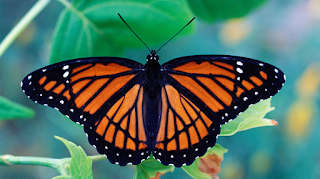
How do organisms develop and organised themselves?

Image
Biology is a world of great symmetry. Pleasing to the eye and of spectacular beauty. Some examples include butterflies, others that are less beautiful may include crayfish and ones that are of great curiosity include yourself. The exceptional symmetry of a butterfly But, biology is also approximate and so there are slight unintended modifications - mistakes. I must stress, these mistakes (often genetic mutations) are not always bad. Some mutations may cause cancer , some may be of benefit and and some may do nothing at all. But how do you understand organisation when it has small random inaccuracies? Scientists are studying the incredible developmental coordination and organisation phenomena that our cells, tissues and organs undergo. Fate Mapping is a method used to study the organisation of cells - typically the embryonic stages of life. 42 years ago an enzyme from the roots of horseradishes was isolated and proved to be an effective marker to study cell progeny. It wa...

Why is finding "patient zero" in an pandemic so important?

Where did it come from? Where did it go? It came from patient zero. And reasons to know why include: How did they obtain the virus? Who have they been in contact with? As of the 21st of June there is no reason to know who patient zero has been in contact with. But for point number 1, it seems abundantly clear that 'fake news' and conspiracy theories have taken the reins amid the Corona Virus pandemic.  What is the origin of the Corona Virus? Before we answer that question, it is best to reflect on history. " Those who cannot remember the past are condemned to repeat it. " - George Santayana. The source of the disease Ebola was unclear for many years. Patient Zero allowed for the identification of the location of patient 0 and subsequently the animals they were in contact with. If animals were suspected as the source of the virus they could be genetically tested and evaluated. If identified as the source, then available it can be public information for...

What is the 'Good Genes Hypothesis' and is it true?

The famous philanthropist Oprah has advised thousands of women across the globe on how to find ' the one '. But Oprah never mentioned the good genes hypothesis. The good genes hypothesis was originally proposed in the 1980s and propagates the idea that observed mates are selected by their ability to pass on genes that increase reproductive success. How might it work? An organisms phenotype is determined by its genotype. Meaning your body observable properties (organs, tissues and cells) are determined by their genes. Therefore if your face is asymmetrical then more mutations have arisen, making you a sub-optional candidate compared to a more symmetrical competitor, who is less prone to mutations. Many psychology studies have shown that greater symmetry has a relationship with attractiveness. Is the good genes theory well supported or true? Whilst it is an appealing hypothesis, a recent study with almost 5000 participants with varying degrees of facial symmetry fou...

NKX2-5 Gene Overview

Image
NKX2-5 Gene Overview In mammalian cells the gene NKX2-5 is found on chromosome 5, more specifically on the long (q) arm of chromosome 5 at position 35.1. (Cytogenetic Location: 5q35.1) Cytogenetic Location: 5q35.1 Transcription of the homeobox NKX2-5 gene into RNA and consequential translation, synthesizes a homeodomain protein. Homeodomain proteins regulate gene expression and cell differentiation during early embryonic development, thus mutations in homeobox genes can cause developmental disorders. The NKX2-5 protein is known as: " Homeobox protein NKX2-5 " and is essential for cardiac development. In the fetal development of mice, disruption of NKX2-5 has proven to be lethal. NKX2-5 is ~3,213 nucleotide bases long and is involved in biological processes that give an organism its shape. Disruption of NKX2-5 has proven to cause abnormal heart shape. Cardiac expression of NKX2-5 continues throughout development and into adult life. References: Myogenic and...

Forcing cancer into submission

Image
Have you ever assisted a goal when scoring in a game? Or set a trap in the hopes to capture an animal? In the recent Nature article:  Springing an evolutionary trap on cancer,  Charles Y. Lin describes how - in an alley-oop like fashion - cancers evade the first drug allowing the second drug to  defeat cancer. Cancer is a complex topic and requires explanation, there are over 100 types (E.g. Breast cancer, Liver cancer or Lung cancer) of cancer so it can be hard to generalize.  A single cell can form a tumor, cells can spread to form tumors at other sites A tumor is a bundle of 'cancer cells' that have uncontrollably divided. Typically this starts as one cell that has 'gone rogue'. In some cases 'metastasis' occurs where cells spread from the original tumor location to other locations around the body, forming multiple tumors. This type of cancer is defined as metastatic cancer - with the other type being benign tumors that cannot spread. Canc...

The public health war you’re forgetting

Amid the coronavirus crisis we have forgotten our old friend. Antimicrobial resistance is one of the greatest threats to global health – killing an estimated 700,000 people every year. A World Health Organization report outlined that in a post-antibiotic age where common infections can kill. Generating a time of crisis for developing countries. What do the statistics say? By 2030 antimicrobial resistance severity has been predicted to double. It is forecasted to double again by 2050, with approximately 10,000,000 deaths every year. Are there any solutions on the horizon? Fortunately, artificial intelligence approaches have been advancing the front of the antimicrobial resistance war across different aspects. Machine-learning has allowed identification of novel compounds and genetic signatures involved in antimicrobial resistance.   Identifying antibiotics such as carbapenem resistance with a 88–99% accuracy and other antibiotics (isoniazid, kanamycin, oflo...